Uterine Fibroid Embolization

What are fibroids?

Uterine fibroids are benign (noncancerous) growths that grow on or within the muscle tissue of the uterus. Uterine fibroids are also called leiomyomas. Approximately 20-40% of women over the age of 35 will develop fibroids. However, younger women can develop them as well. Although found in all women, fibroids are more common in women of African-American descent and statistics indicate up to 80% of these women will eventually develop fibroids. About 10-20% of women with uterine fibroids will develop symptoms or problems related to their growth. Depending upon the size and location of the fibroids within the uterus, the symptoms can significantly impact a woman’s quality of life.

Fibroids are hormonally sensitive and as estrogen levels increase prior to menopause, the fibroids increase in size. As a woman enters menopause around age 50, the tumors tend to shrink. If a woman is placed on estrogen therapy for menopausal symptoms, the fibroids can again grow and the symptoms return. The size and number of fibroids are quite variable. They can be as small as a walnut or as large as a cantaloupe or even bigger.

Symptoms of Fibroids

Women aged 35-54 potentially face an increased risk for uterine fibroid tumors. Depending upon the size and location of the fibroid tumors within the uterus, women may experience different symptoms or no symptoms at all.

Because fibroid tumors are hormonally sensitive, symptoms of fibroids are usually cyclical like menstruation. An increase in estrogen levels can cause the fibroids to grow worsening the symptoms. Many women underestimate the symptoms of fibroid tumors because they have become accustomed to the pain, pressure, and heavy bleeding associated with fibroids.

The following is a list of symptoms associated with fibroids:

  • Heavy, excessive menstrual bleeding and prolonged monthly periods, sometimes with clots. A typical cycle occurs every 28 days and last 4-5 days. It usually does not interfere with a woman’s daily routine. Uterine fibroids may be a cause for prolonged heavy bleeding which can result in anemia and fatigue.
  • Frequent occurrence of spotting events due to abnormal uterine bleeding.
  • Anemia (low blood count)
  • Pressure on the bladder leading to frequent urination or incontinence
  • Pain during sexual intercourse
  • Pressure on bowel leading to constipation
  • Enlarging abdomen
  • Pain and pressure sensation in pelvis
  • Back and/or leg pain

Although uterine fibroid tumors are a common cause for many of the above symptoms, other conditions should be excluded. We will work with your doctor to assure the appropriate tests have been completed prior to treating your fibroids.

Treatment Options

Hysterectomy (surgical removal of the uterus) for decades has been the traditional treatment for women with significant symptoms related to fibroids who no longer desire children. However, hysterectomy is not a good or desirable option for all women. Some women may prefer an option that preserves their ability to have children. Hysterectomy is considered major abdominal surgery and may require days of hospitalization and weeks of recovery time. Additionally, some women may prefer to preserve their uterus for psychological reasons. Although rare, hysterectomy may result in post-operative complications or even death.

Myomectomy is a second surgical option which involves cutting out one or more of the fibroids. Myomectomy may be a good option depending upon the size, number, and location of the fibroid tumors. Most women have multiple fibroids which may not make this a feasible option. The more fibroids present, the less successful the myomectomy surgery which occasionally may result in a hysterectomy. Depending upon extent of the surgery, recovery time can be days or weeks. Like uterine artery embolization, myomectomy can preserve the woman’s ability to have future pregnancy.

Nonsurgical options for control of some symptoms associated with fibroids include use of birth control pills to control excessive bleeding, non-steroidal anti-inflammatory medication (NSAID) for pain control and so-called GnRH agonists. GnRH agonists decrease estrogen production from the ovaries and can temporarily decrease fibroid size. They usually are not prescribed for more than six months, after which symptoms can recur.

Uterine fibroid embolization is a relatively new but proven nonsurgical technique which preserves the uterus but reduces fibroid size.

Uterine Fibroid Embolization

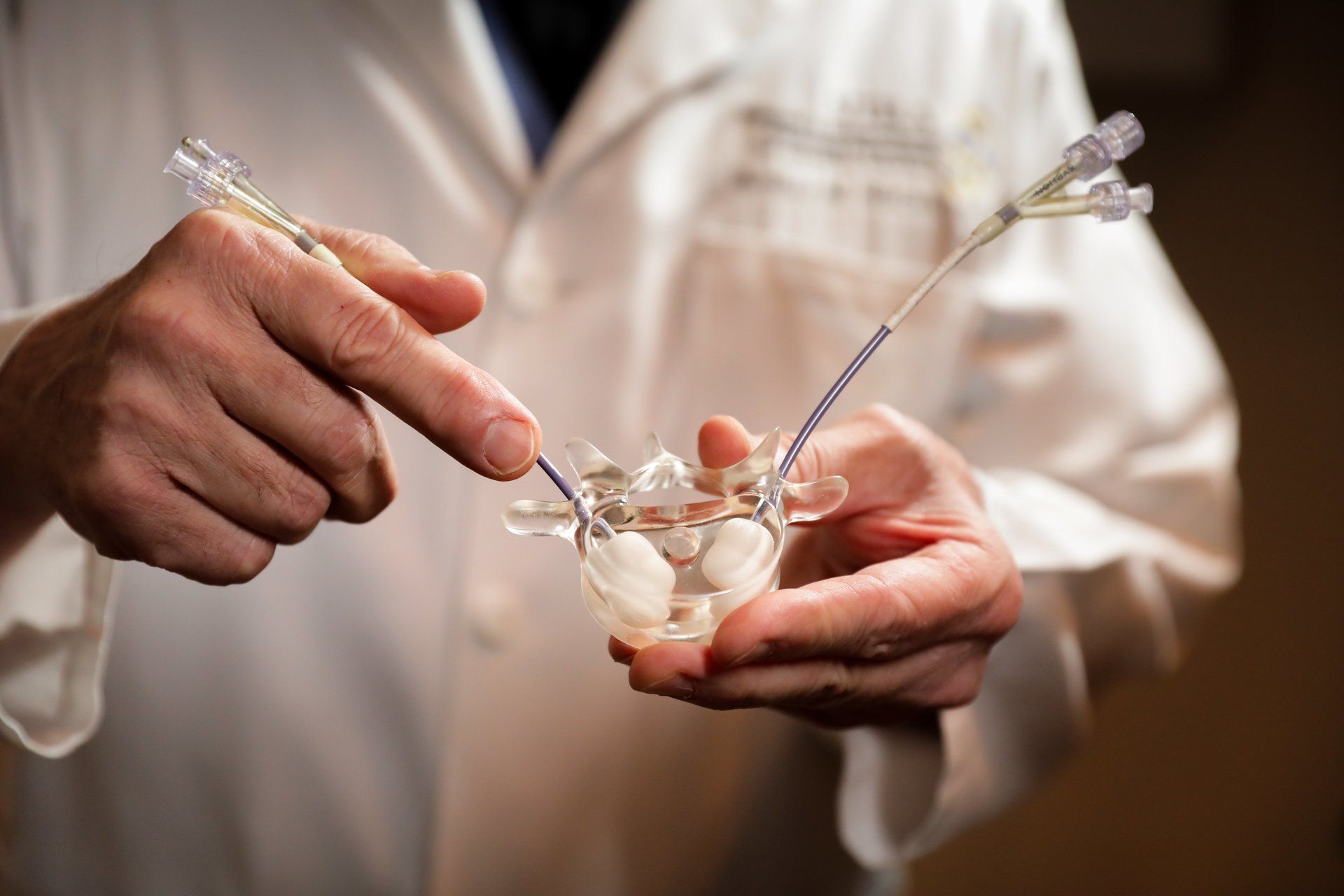
Uterine fibroid embolization (UFE), also known as uterine artery embolization (UAE), is a major advance in women’s health. It provides a nonsurgical alternative to traditional hysterectomy for treatment of symptomatic uterine fibroids. UFE is a minimally invasive procedure performed by an interventional radiologist through a tiny nick in the skin of the groin. A small tube (catheter) is placed into the femoral artery and tiny microscopic particles (Embospheres®) are injected into the uterine arteries supplying blood to the uterus and the fibroids. The patient is conscious during the procedure but is sedated so she does not feel any pain. It does not require general anesthesia. The tiny particles injected into the arteries supplying the uterus starve the fibroids of the nutrients they need to grow. Over the next several months, the fibroids shrink and die.

The uterine fibroid embolization procedure generally takes about an hour in the interventional radiology room. Hospital stay is usually only one night during which the patient receives pain medication and other drugs to treat any pain and cramping associated with the procedure. The patient is discharged with pain and anti-inflammatory medications. Most women resume light activity within a few days and return to work in 7 to 10 days.

The UFE procedure is very effective in treating symptomatic fibroids. About 85-90% of women have significant relief or total resolution of fibroid symptoms such as heavy bleeding, pain or pressure, and other fibroid-related problems. Recurrence of fibroids following UFE is rare.

Embolization has been used by interventional radiologists to treat tumors since 1966. The first embolization procedure to treat symptomatic uterine fibroids was performed in France in the 1970’s. Since 1995, UFE has become a frequent treatment option for fibroid disease, with tens of thousands of procedures performed in the U.S. each year. According to a study conducted in multiple treatment centers that compared UFE to hysterectomy (1), UFE offered a shorter hospital stay, a faster return to work, and fewer complications after 30 days. The tiny particles used to cut off the blood supply to the fibroids have been used for decades, are safe and approved by the FDA. The procedure is covered by most insurance companies and Medicaid.

The longer term effect on fertility following UFE is not entirely known. However, there have been numerous reports of pregnancy following UFE. One study comparing fertility following UFE to myomectomy showed a similar rate of pregnancy. About 2-3% of women undergoing UFE will go into menopause shortly after the procedure. UFE is considered very safe and has shorter recuperation and fewer complications than hysterectomy (2). However, as with all minimally invasive procedures, there are small risks. Rarely, infection can result, requiring antibiotics for treatment. There is less than a 1% chance of damage to the uterus requiring hysterectomy. These complication rates are lower than that of myomectomy and hysterectomy.

If you are experiencing these symptoms described above that may be caused by uterine fibroids, we will be glad to schedule an appointment with one of our interventional radiologists to determine if UFE is the best option for you.

(1) Spies, J., et al., Outcome of uterine embolization and hysterectomy for leiomyomas: results of a multicenter study. American Journal of Obstetrics & Gynecology 2004; 191: 22-31.

(2) Lohle, P. et al., Long-term Outcome of Uterine Artery Embolization for Symptomatic Uterine Leiomyomas. JVIR 2008; 19:319-326.

Reprinted with permission of the Society of Interventional Radiology. C 2004, 2008, www.SIRweb.org. All rights reserved.